Lease & hire purchase · 4 min read
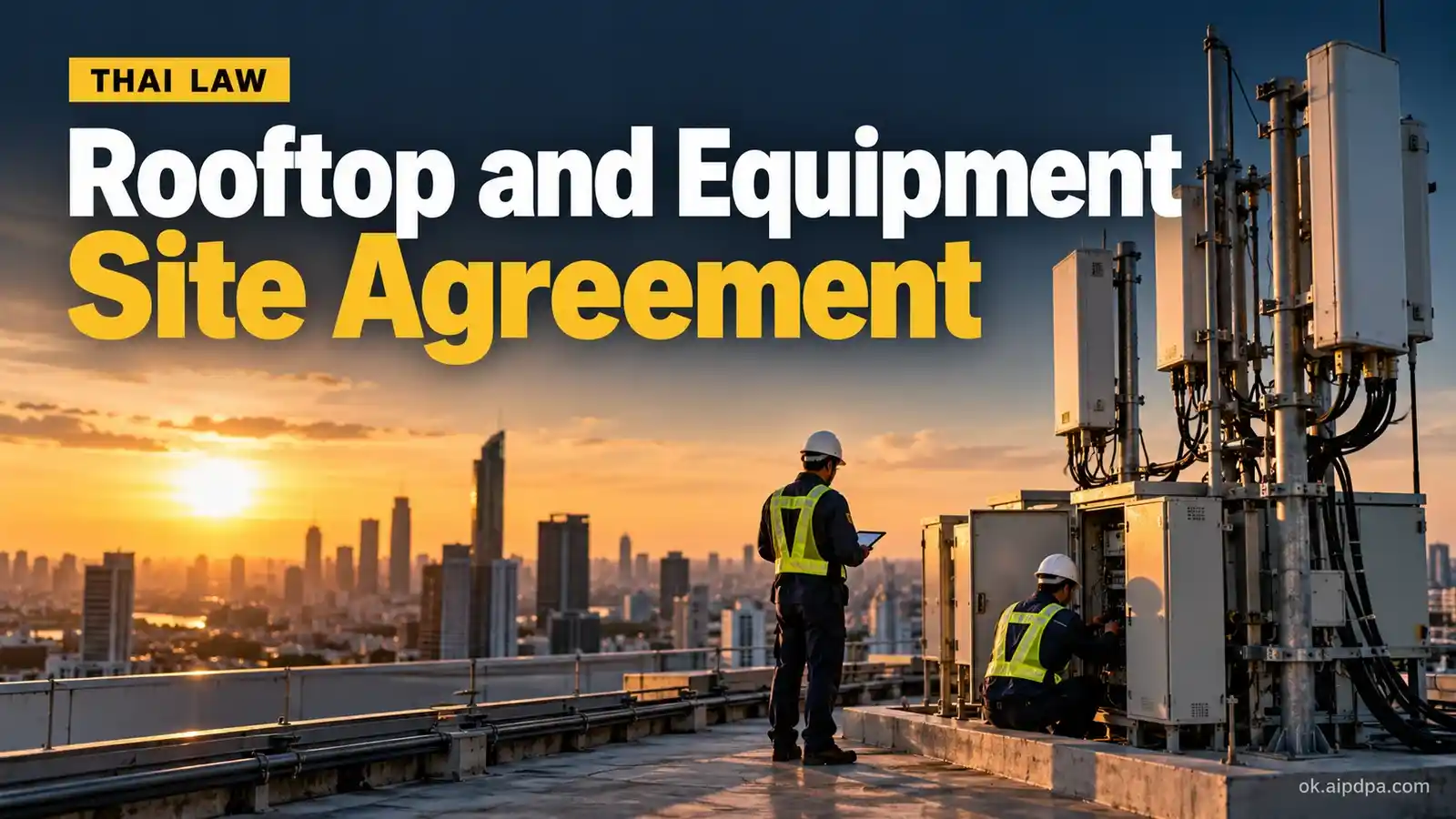
What should a Rooftop and Equipment Site Agreement include under Thai law?
Contents
The Rooftop and Equipment Site Agreement on this site is an English-language document drafted for use under Thai law. Its 18 clauses cover Definitions and Interpretation; Lease of the Site; Permits and Structural Safety; Installation and Works; Rent; Electricity; Access; Maintenance and Roof Works; Interference; Insurance and Liability; Personal Data and Confidentiality; and 7 more. The notes below explain Before installation; Stamp duty and registration; and Tax.
| Clauses in the template | 18 |
|---|---|
| Stamp duty | A lease of part of a building is a lease for stamp duty (Instrument 1). Duty is 1 THB for every 1,000 THB or part of 1,000 THB of the total rent for the Term. On the monthly Rent and the Term you entered, the duty is the amount the system calculates from the figures entered on the original and the amount the system calculates from the figures entered on each counterpart. Because the lease is registered, the duty is paid in money at the Land Office on the day of registration.Because the total rent is 1,000,000 THB or more, the duty must be paid in money at the Revenue Department within 15 days after signing. The figure uses the starting Rent. Because the Rent increases every year, calculate the duty on the actual total. A lease of more than 3 years must be registered at the Land Office, or it can be enforced for 3 years only. The registration fee is 1% of the total rent. Ask the Land Office in advance how it will describe a lease of part of a roof; a clear plan of the Site helps.- Rooftop solar and telecom sites often need 10 years or more. A lease of 3 years or less does not need registration, but a buyer of the Building may not be bound by a promise to extend it. If the Operator needs a long term, register the lease. |
| Tax | A company Operator normally withholds 5% of the Rent and gives the Owner the certificate (Clause 5.3). Rent for immovable property is exempt from VAT, but electricity recharged by the Owner is not rent. The Owner remains liable for the land and building tax on the Building. |
| Form or registration | A lease of part of a building is a lease for stamp duty (Instrument 1). Duty is 1 THB for every 1,000 THB or part of 1,000 THB of the total rent for the Term. On the monthly Rent and the Term you entered, the duty is the amount the system calculates from the figures entered on the original and the amount the system calculates from the figures entered on each counterpart. Because the lease is registered, the duty is paid in money at the Land Office on the day of registration.Because the total rent is 1,000,000 THB or more, the duty must be paid in money at the Revenue Department within 15 days after signing. The figure uses the starting Rent. Because the Rent increases every year, calculate the duty on the actual total. A lease of more than 3 years must be registered at the Land Office, or it can be enforced for 3 years only. The registration fee is 1% of the total rent. Ask the Land Office in advance how it will describe a lease of part of a roof; a clear plan of the Site helps.- Rooftop solar and telecom sites often need 10 years or more. A lease of 3 years or less does not need registration, but a buyer of the Building may not be bound by a promise to extend it. If the Operator needs a long term, register the lease. |
| Language of the form | English |
| Price of the form on this site | 990 THB |
What the template covers
- Definitions and Interpretation
- Lease of the Site
- Permits and Structural Safety
- Installation and Works
- Rent
- Electricity
- Access
- Maintenance and Roof Works
- Interference
- Insurance and Liability
- Personal Data and Confidentiality
- Transfer of the Building
- Termination
- Removal and Reinstatement
- Registration, Stamp Duty and Costs
- Notices
- Governing Law and Disputes
- General
Before installation
- Get a structural assessment signed by a licensed civil engineer before anything is fixed to the roof (Clause 3.1). Roofs are often designed for maintenance loads only; wind load and ballast matter as much as weight.
- Under the Building Control Act, the owner of the building is the person who applies for a permit or makes a notification for a modification of the building. Installing heavy equipment or a large sign may be a modification. Clause 3.2 requires the Owner to sign and the Operator to prepare and pay. Work without a required permit can lead to an order to stop, a ban on use and an order to demolish, and the owner is the person penalised.
- The Operator must hold the licences required by the telecommunications regulator and keep radio-frequency exposure within the official limits (Clause 3.4). Neighbours and occupiers often object to masts; ask for the annual measurement report.- A rooftop solar system needs the approval of the electricity authority before it is connected, and larger systems may need a licence or notification to the energy regulator. Some small rooftop systems are exempt from building permits if an engineer certifies the load, but check the current rules with the local authority. If the Owner will buy the electricity, a power purchase agreement is needed as well.- A sign over a public way that is larger than 1 square metre or heavier than 10 kilograms with its structure, and some signs close to a public way, count as buildings under the Building Control Act and need their own permit and engineer's certification. The Operator pays the signboard tax each year (Clause 3.4).
Stamp duty and registration
- A lease of part of a building is a lease for stamp duty (Instrument 1). Duty is 1 THB for every 1,000 THB or part of 1,000 THB of the total rent for the Term. On the monthly Rent and the Term you entered, the duty is the amount the system calculates from the figures entered on the original and the amount the system calculates from the figures entered on each counterpart. Because the lease is registered, the duty is paid in money at the Land Office on the day of registration.Because the total rent is 1,000,000 THB or more, the duty must be paid in money at the Revenue Department within 15 days after signing.
- The figure uses the starting Rent. Because the Rent increases every year, calculate the duty on the actual total.
- A lease of more than 3 years must be registered at the Land Office, or it can be enforced for 3 years only. The registration fee is 1% of the total rent. Ask the Land Office in advance how it will describe a lease of part of a roof; a clear plan of the Site helps.- Rooftop solar and telecom sites often need 10 years or more. A lease of 3 years or less does not need registration, but a buyer of the Building may not be bound by a promise to extend it. If the Operator needs a long term, register the lease.
Tax
- A company Operator normally withholds 5% of the Rent and gives the Owner the certificate (Clause 5.3). Rent for immovable property is exempt from VAT, but electricity recharged by the Owner is not rent.
- The Owner remains liable for the land and building tax on the Building.
During the Term and at the end
- Keep a list of the Operator's authorised personnel and log every visit (Clause 7.1).
- Plan roof repairs early. The Owner must give … days' notice before the Equipment has to be moved (Clause 8.3).
- At the end, the Operator must remove everything and seal the roof within … days (Clause 14.1). Inspect the waterproofing together before returning the removal deposit (Clause 14.3).
Signing and evidence
- Keep the signed Agreement, the engineer's assessment, the approved and as-built drawings, the Permits and the insurance certificates.
- A Thai court works in Thai. A Party that relies on this Agreement in court must file a certified Thai translation.
Author and sources
Compiled from the notes that accompany the English contract templates on this site, published by Phuwara Krobtaku (ภูวรา ครอบตะคุ), Thai attorney-at-law, licence no. 477/2558. The short answer and summary at the top of this page are put together by the site from the template's clause headings and notes. Statutes are quoted only in the official Thai text: Thai is the only official language of Thai legislation, and an unofficial translation can mislead. Article registry OKC-03D0DC. If you reuse this content, please credit the author and link to the original.
Frequently asked questions
Does a Rooftop and Equipment Site Agreement need stamp duty in Thailand?
A lease of part of a building is a lease for stamp duty (Instrument 1). Duty is 1 THB for every 1,000 THB or part of 1,000 THB of the total rent for the Term. On the monthly Rent and the Term you entered, the duty is the amount the system calculates from the figures entered on the original and the amount the system calculates from the figures entered on each counterpart. Because the lease is registered, the duty is paid in money at the Land Office on the day of registration.Because the total rent is 1,000,000 THB or more, the duty must be paid in money at the Revenue Department within 15 days after signing. The figure uses the starting Rent. Because the Rent increases every year, calculate the duty on the actual total. A lease of more than 3 years must be registered at the Land Office, or it can be enforced for 3 years only. The registration fee is 1% of the total rent. Ask the Land Office in advance how it will describe a lease of part of a roof; a clear plan of the Site helps.- Rooftop solar and telecom sites often need 10 years or more. A lease of 3 years or less does not need registration, but a buyer of the Building may not be bound by a promise to extend it. If the Operator needs a long term, register the lease.
What tax applies to a Rooftop and Equipment Site Agreement in Thailand?
A company Operator normally withholds 5% of the Rent and gives the Owner the certificate (Clause 5.3). Rent for immovable property is exempt from VAT, but electricity recharged by the Owner is not rent. The Owner remains liable for the land and building tax on the Building.
Does a Rooftop and Equipment Site Agreement have to be registered or made in a particular form?
A lease of part of a building is a lease for stamp duty (Instrument 1). Duty is 1 THB for every 1,000 THB or part of 1,000 THB of the total rent for the Term. On the monthly Rent and the Term you entered, the duty is the amount the system calculates from the figures entered on the original and the amount the system calculates from the figures entered on each counterpart. Because the lease is registered, the duty is paid in money at the Land Office on the day of registration.Because the total rent is 1,000,000 THB or more, the duty must be paid in money at the Revenue Department within 15 days after signing. The figure uses the starting Rent. Because the Rent increases every year, calculate the duty on the actual total. A lease of more than 3 years must be registered at the Land Office, or it can be enforced for 3 years only. The registration fee is 1% of the total rent. Ask the Land Office in advance how it will describe a lease of part of a roof; a clear plan of the Site helps.- Rooftop solar and telecom sites often need 10 years or more. A lease of 3 years or less does not need registration, but a buyer of the Building may not be bound by a promise to extend it. If the Operator needs a long term, register the lease.
How should a Rooftop and Equipment Site Agreement be signed?
Keep the signed Agreement, the engineer's assessment, the approved and as-built drawings, the Permits and the insurance certificates. A Thai court works in Thai. A Party that relies on this Agreement in court must file a certified Thai translation.
What clauses does a Rooftop and Equipment Site Agreement on this site include?
Definitions and Interpretation; Lease of the Site; Permits and Structural Safety; Installation and Works; Rent; Electricity; Access; Maintenance and Roof Works; Interference; Insurance and Liability; Personal Data and Confidentiality; Transfer of the Building; Termination; Removal and Reinstatement; Registration, Stamp Duty and Costs; Notices; Governing Law and Disputes; General
Thai law cited (official Thai text)
The 12 sections below are quoted from the official Thai text, the only official language of Thai legislation. No translation is given, because an unofficial translation can mislead; check the Royal Gazette before relying on them in court.
ประมวลกฎหมายแพ่งและพาณิชย์ มาตรา 538
เช่าอสังหาริมทรัพย์นั้น ถ้ามิได้มีหลักฐานเป็นหนังสืออย่างหนึ่งอย่างใดลงลายมือชื่อฝ่ายที่ต้องรับผิดเป็นสำคัญ ท่านว่าจะฟ้องร้องให้บังคับคดีหาได้ไม่ ถ้าเช่ามีกำหนดกว่าสามปีขึ้นไป หรือกำหนดตลอดอายุของผู้เช่าหรือผู้ให้เช่าไซร้ หากมิได้ทำเป็นหนังสือและจดทะเบียนต่อพนักงานเจ้าหน้าที่ ท่านว่าการเช่านั้นจะฟ้องร้องให้บังคับคดีได้แต่เพียงสามปี
หมวด 1 บทเบ็ดเสร็จทั่วไป
ประมวลกฎหมายแพ่งและพาณิชย์ มาตรา 540
อันอสังหาริมทรัพย์ ท่านห้ามมิให้เช่ากันเป็นกำหนดเวลาเกินกว่าสามสิบปี ถ้าได้ทำสัญญากันไว้เป็นกำหนดเวลานานกว่านั้น ท่านก็ให้ลดลงมาเป็นสามสิบปี
หมวด 1 บทเบ็ดเสร็จทั่วไป
ประมวลกฎหมายแพ่งและพาณิชย์ มาตรา 552
อันผู้เช่าจะใช้ทรัพย์สินที่เช่าเพื่อการอย่างอื่นนอกจากที่ใช้กันตามประเพณีนิยมปกติ หรือการดังกำหนดไว้ในสัญญานั้น ท่านว่าหาอาจจะทำได้ไม่
หมวด 3 หน้าที่และความรับผิดของผู้เช่า
ประมวลกฎหมายแพ่งและพาณิชย์ มาตรา 553
ผู้เช่าจำต้องสงวนทรัพย์สินที่เช่านั้นเสมอกับที่วิญญูชนจะพึงสงวนทรัพย์สินของตนเอง และต้องบำรุงรักษาทั้งทำการซ่อมแซมเล็กน้อยด้วย
หมวด 3 หน้าที่และความรับผิดของผู้เช่า
ประมวลกฎหมายแพ่งและพาณิชย์ มาตรา 555
ผู้เช่าจำต้องยอมให้ผู้ให้เช่าหรือตัวแทนของผู้ให้เช่าเข้าตรวจดูทรัพย์สินที่เช่าเป็นครั้งคราว ในเวลาและระยะอันสมควร
หมวด 3 หน้าที่และความรับผิดของผู้เช่า
ประมวลกฎหมายแพ่งและพาณิชย์ มาตรา 556
ถ้าในระหว่างเวลาเช่ามีเหตุจะต้องซ่อมแซมทรัพย์สินซึ่งเช่านั้นเป็นการเร่งร้อน และผู้ให้เช่าประสงค์จะทำการอันจำเป็นเพื่อที่จะซ่อมแซมเช่นว่านั้นไซร้ ท่านว่าผู้เช่าจะไม่ยอมให้ทำนั้นไม่ได้ แม้ถึงว่าการนั้นจะเป็นความไม่สะดวกแก่ตน ถ้าการซ่อมแซมเป็นสภาพซึ่งต้องกินเวลานานเกินสมควร จนเป็นเหตุให้ทรัพย์สินนั้นไม่เหมาะแก่การที่จะใช้เพื่อประโยชน์ที่เช่ามา ผู้เช่าจะบอกเลิกสัญญาเสียก็ได้
หมวด 3 หน้าที่และความรับผิดของผู้เช่า
ประมวลกฎหมายแพ่งและพาณิชย์ มาตรา 558
อันทรัพย์สินที่เช่านั้น ถ้ามิได้รับอนุญาตของผู้ให้เช่าก่อน ผู้เช่าจะทำการดัดแปลงหรือต่อเติมอย่างหนึ่งอย่างใดหาได้ไม่ ถ้าและผู้เช่าทำไปโดยมิได้รับอนุญาตของผู้ให้เช่าเช่นนั้นไซร้ เมื่อผู้ให้เช่าเรียกร้อง ผู้เช่าจะต้องทำให้ทรัพย์สินนั้นกลับคืนคงสภาพเดิม ทั้งจะต้องรับผิดต่อผู้ให้เช่าในความสูญหายหรือบุบสลายอย่างใด ๆ อันเกิดแต่การดัดแปลงต่อเติมนั้นด้วย
หมวด 3 หน้าที่และความรับผิดของผู้เช่า
ประมวลกฎหมายแพ่งและพาณิชย์ มาตรา 562
ผู้เช่าจะต้องรับผิดในความสูญหายหรือบุบสลายอย่างใด ๆ อันเกิดขึ้นแก่ทรัพย์สินที่เช่า เพราะความผิดของผู้เช่าเอง หรือของบุคคลซึ่งอยู่กับผู้เช่า หรือของผู้เช่าช่วง
หมวด 3 หน้าที่และความรับผิดของผู้เช่า
ประมวลกฎหมายแพ่งและพาณิชย์ มาตรา 569
อันสัญญาเช่าอสังหาริมทรัพย์นั้นย่อมไม่ระงับไปเพราะเหตุโอนกรรมสิทธิ์ทรัพย์สินซึ่งให้เช่า
หมวด 4 ความระงับแห่งสัญญาเช่า
ประมวลกฎหมายแพ่งและพาณิชย์ มาตรา 224/1
ถ้าลูกหนี้มีหน้าที่ผ่อนชำระหนี้เงินเป็นงวด และลูกหนี้ผิดนัดไม่ชำระหนี้ในงวดใด เจ้าหนี้อาจเรียกดอกเบี้ยในระหว่างเวลาผิดนัดได้เฉพาะจากต้นเงินของงวดที่ลูกหนี้ผิดนัดนั้น
ส่วนที่ 1 การไม่ชำระหนี้
ประมวลกฎหมายแพ่งและพาณิชย์ มาตรา 373
ความตกลงทำไว้ล่วงหน้าเป็นข้อความยกเว้นมิให้ลูกหนี้ต้องรับผิดเพื่อกลฉ้อฉล หรือความประมาทเลินเล่ออย่างร้ายแรงของตนนั้น ท่านว่าเป็นโมฆะ
หมวด 2 ผลแห่งสัญญา
พ.ร.บ.ควบคุมอาคาร พ.ศ. 2522 มาตรา 4
นิยามคำว่า “ผู้ตรวจสอบ” เพิ่มโดยพระราชบัญญัติควบคุมอาคาร (ฉบับที่ 3) พ.ศ. 2543
พระราชบัญญัติควบคุมอาคาร พ.ศ. 2522 (ฉบับปรับปรุง 2558 ของสำนักงานคณะกรรมการกฤษฎีกา)
More in Lease & hire purchase
 What should a Car Rental Agreement include under Thai law?Practical notes on the Car Rental Agreement under Thai law: At pick-up; Stamp duty; VAT and withholding tax; During the rental; At return; The deposit, fines and tolls; Evidence to keep; and 1 more.
 What should a Commercial Lease Agreement include under Thai law?Practical notes on the Commercial Lease Agreement under Thai law: Stamp duty; Registration at the Land Office; Tax; Before the Lessee moves in; During the lease and at the end; and Signing and evidence.
 What should a Commercial Sublease Agreement include under Thai law?Practical notes on the Commercial Sublease Agreement under Thai law: Before anyone pays or moves in; The Subtenant's direct liability to the Head Lessor; Stamp duty and registration; Tax; and 2 more.
 What should a Shipping Container Lease Agreement include under Thai law?Practical notes on the Shipping Container Lease Agreement under Thai law: Stamp duty; VAT and withholding tax; At pick-up and return; Demurrage and detention; Time limits; and Signing and evidence.
 What should a Coworking and Serviced Office Agreement include under Thai law?Practical notes on the Coworking and Serviced Office Agreement under Thai law: Service, not a lease; Stamp duty; VAT and withholding tax; Renewal and ending; Personal data and IT security; and Signing and evidence.
 What should an Equipment Hire Agreement include under Thai law?Practical notes on the Equipment Hire Agreement under Thai law: At handover and return; Who bears loss or damage; Safety and legal requirements; Tax and stamp duty; and Signing and evidence.